

A practical introduction to ordering hoppers, string hoppers and kiribath, including portions, accompaniments and dietary questions.
Start with the base, then choose accompaniments
A Sri Lankan breakfast may be assembled from a main starch and several accompaniments. Ask what the meal includes before adding individual items. A short menu description may refer to a complete plate or only one part of it.
If you are trying unfamiliar dishes, order a modest amount and add more if needed. This makes it easier to explore different textures without leaving a table of food. Ask which dishes are ready now and which are cooked to order, especially when you have a transport departure to meet.
Hoppers and string hoppers are different dishes
Hoppers are bowl-shaped pancakes, commonly made with a fermented rice-flour and coconut-milk batter. An egg hopper has an egg cooked into its centre. String hoppers are steamed nests of fine strands, commonly made from rice flour. The similar English names can make first orders confusing.
Tell the server which you mean, or point to an example if one is visible. Ask how many pieces come in a serving and which curries or sambols are included. A freshly prepared hopper has a different eating experience from a plate of string hoppers served with sauce, so there is value in trying them on separate mornings.
Kiribath and the role of condiments
Kiribath is rice cooked with coconut milk, often served in pieces. It can be accompanied by a savoury condiment such as lunu miris, or by sweeter additions. Ask what is being served that day instead of expecting every kitchen to offer the same combination.
Keep a strong condiment on the side until you know how it tastes. The heat of one accompaniment does not tell you the spice level of everything on the plate. If you prefer milder food, explain that preference before ordering and ask which available dishes suit it.
Make dietary requirements specific
Do not assume that the name of a dish establishes every ingredient or preparation method. Ask about egg, dairy, fish, meat and other ingredients you avoid. Sambols, sauces and curries need their own questions, even when the main item appears suitable.
For a serious allergy, discuss ingredients and cross-contact directly with the kitchen and follow your own clinical advice. A general food guide cannot certify a meal as safe. If the staff cannot give a clear answer, choose a different dish or establishment rather than relying on guesswork.
Fit breakfast into the travel day
At a guesthouse, ask the previous evening what breakfast is available and when it can be served. Some preparations need advance notice. Confirm whether breakfast is included in your booking and whether an early departure changes the options.
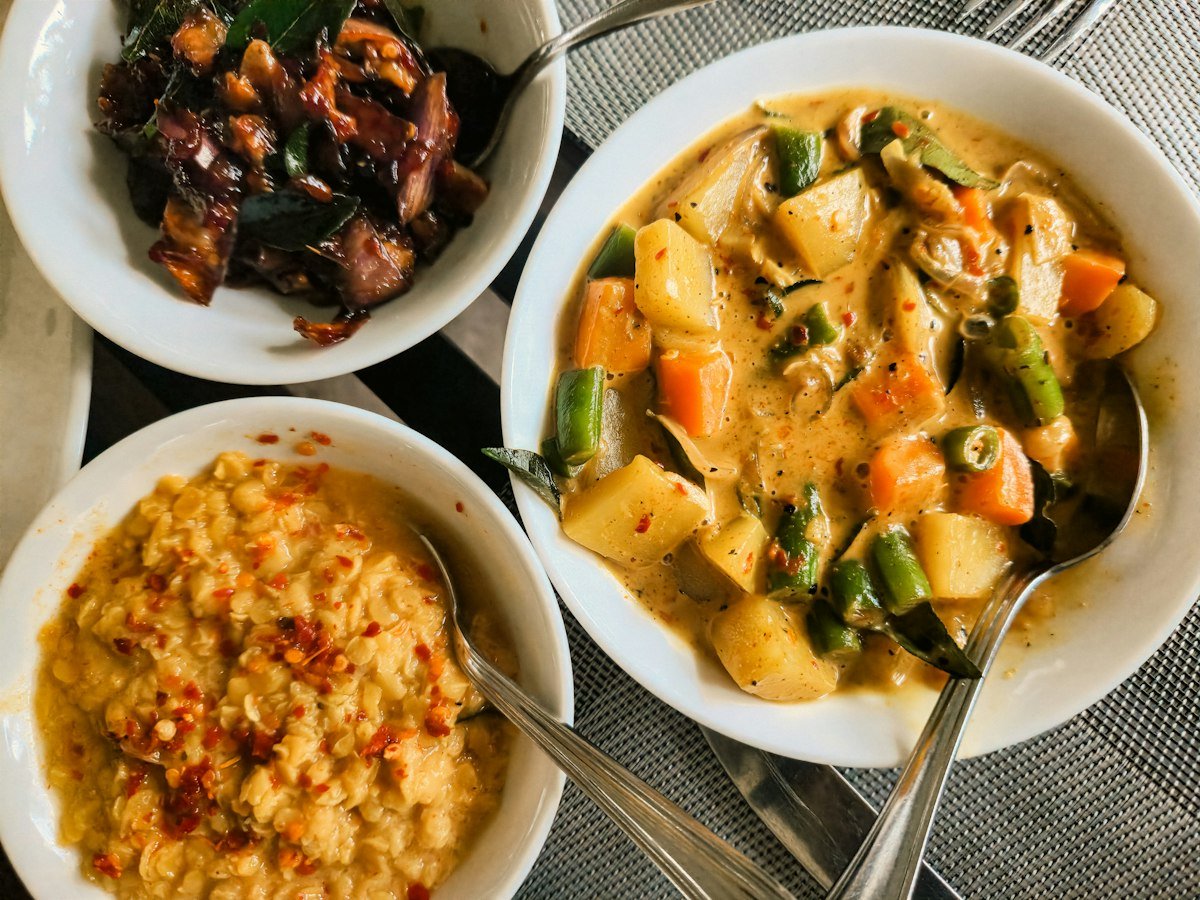
Give yourself time to sit and eat when possible. Breakfast can be one of the simplest ways to learn about everyday food without booking a formal experience. The accompanying curry photograph illustrates possible accompaniments; it does not depict each breakfast dish described here.
Destination guides · Food & drink · Plan your trip · Responsible travel
Sources and editorial notes
Researched by LankaLiving, 5 October 2026. Planning suggestions are editorial examples, not firsthand inspection reports. Confirm changing access, prices and schedules directly. Editorial policy.
